Shoe Sizing Guide

Find Your Perfect Running Shoe Size
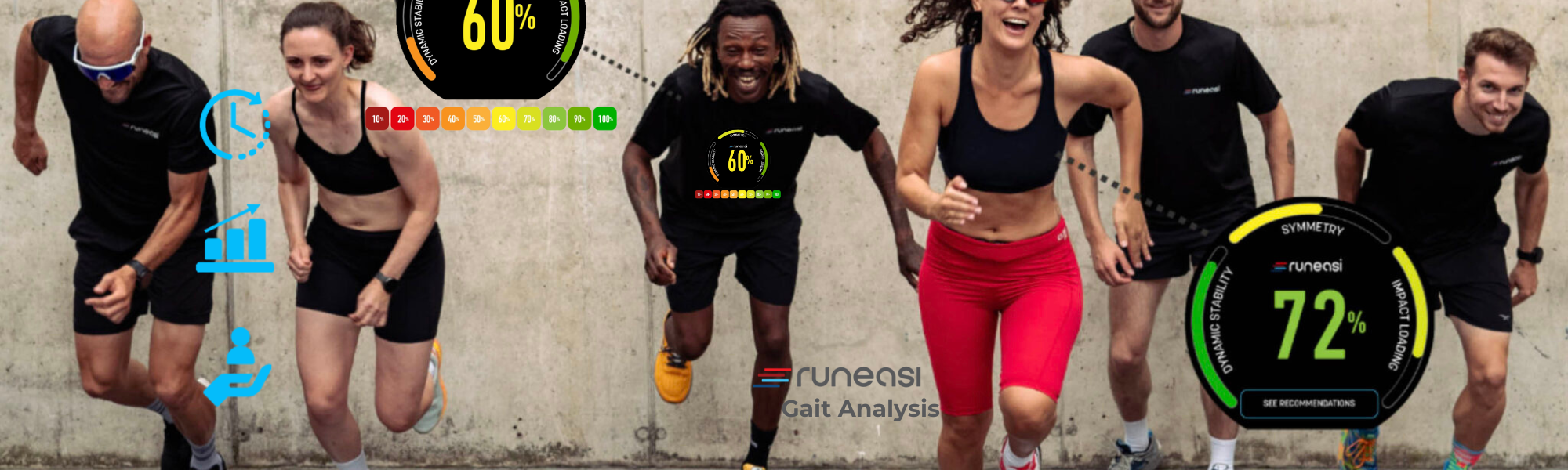
Sizing your running shoes correctly is one of the most important steps to a comfortable, injury-free run. Use the guides below to find your ideal fit — or book a RunEasi Gait Analysis for a fully personalised recommendation.
Step 1: Measure Your Foot
- Place a blank sheet of paper on a hard floor and stand on it with your full weight.
- Trace the outline of your foot with a pen held vertically.
- Measure the longest distance from heel to toe (in mm).
- Measure the widest part of your foot for width.
- Tip: Measure in the afternoon or evening — feet swell throughout the day.
Step 2: Use the Size Chart
Match your foot length (mm) to your size below. When between sizes, size up.
Men's Size Chart
| Foot Length (mm) | SA / EU | UK | US |
|---|---|---|---|
| 245–249 | 39 | 6 | 7 |
| 250–254 | 40 | 6.5 | 7.5 |
| 255–259 | 40.5 | 7 | 8 |
| 260–264 | 41 | 7.5 | 8.5 |
| 265–269 | 42 | 8 | 9 |
| 270–274 | 42.5 | 8.5 | 9.5 |
| 275–279 | 43 | 9 | 10 |
| 280–284 | 44 | 9.5 | 10.5 |
| 285–289 | 44.5 | 10 | 11 |
| 290–294 | 45 | 10.5 | 11.5 |
| 295–299 | 46 | 11 | 12 |
| 300–304 | 46.5 | 11.5 | 12.5 |
Women's Size Chart
| Foot Length (mm) | SA / EU | UK | US |
|---|---|---|---|
| 215–219 | 35 | 2.5 | 5 |
| 220–224 | 35.5 | 3 | 5.5 |
| 225–229 | 36 | 3.5 | 6 |
| 230–234 | 37 | 4 | 6.5 |
| 235–239 | 37.5 | 4.5 | 7 |
| 240–244 | 38 | 5 | 7.5 |
| 245–249 | 38.5 | 5.5 | 8 |
| 250–254 | 39 | 6 | 8.5 |
| 255–259 | 40 | 6.5 | 9 |
| 260–264 | 40.5 | 7 | 9.5 |
| 265–269 | 41 | 7.5 | 10 |
Step 3: Running Shoe Fit Tips
- Thumb's width of space at the toe — your longest toe should not touch the end of the shoe.
- Go up 0.5–1 size from your casual shoe size — feet swell during runs.
- Heel should feel snug with no slipping, but not tight.
- Widest part of your foot should align with the widest part of the shoe.
- If you wear orthotics or thick insoles, try the shoe with them in before buying.
Step 4: Know Your Width
| Width Type | Description | What to Look For |
|---|---|---|
| Narrow (B/2A) | Foot is slender relative to length | Brands: Saucony, Mizuno standard fit |
| Standard (D/B) | Average width — fits most shoes | Most running shoes are standard width |
| Wide (2E/D) | Foot is broader relative to length | Look for "Wide" or "2E" options; New Balance, Brooks offer wide fits |
| Extra Wide (4E) | Significantly broader foot | New Balance 4E range; ASICS Gel-Kayano wide |
Brand Fit Notes
- ASICS — Generally true to size; narrower toe box on performance models.
- Brooks — True to size; generous toe box; wide options available.
- New Balance — True to size; best wide-fit range in the industry.
- Saucony — Runs slightly narrow; consider half a size up if wide-footed.
- Nike — Runs slightly small and narrow; size up half a size.
- Hoka — True to size; wide toe box suits broader feet well.
- On Running — Runs true to size; CloudTec sole feels firmer initially; standard width.
- Salomon — Runs slightly long; consider sizing down half a size, especially in trail models.
- Puma — Generally true to size; Nitro and Velocity models have a snug midfoot; standard to slightly narrow width.
- Mizuno — True to size; narrower fit overall; wide options available in Wave Rider and Inspire.
Not Sure? Get a Gait Analysis
The most accurate way to find your perfect running shoe is a professional gait analysis. Our RunEasi Gait Analysis assesses your foot strike, arch type, and biomechanics to match you with the ideal shoe — not just the right size, but the right shoe for how you run.