


Nike Structure Plus Mens Road Running Shoes – Midnight Navy/Black
Nike Structure Plus Mens Road Running Shoes – Midnight Navy/Black
Couldn't load pickup availability
Product Description
Nike Structure Plus Men's Road Running Shoes
Maximum cushioning meets structured stability in the Nike Structure Plus. Built for runners who want a supportive, highly cushioned daily trainer without giving up the responsive feel associated with Nike's premium foams, the Structure Plus combines ZoomX foam with ReactX foam in a double-stacked midsole.
The result is a smooth, cushioned and secure road-running platform designed to make everyday mileage more comfortable while providing a more guided transition from heel to toe. It is particularly well suited to runners who prefer noticeable underfoot support, long-run comfort and a stable platform as fatigue builds.
With a 10mm heel-to-toe drop, approximately 309g in a men's US 10, an engineered mesh upper and a durable dual-rubber outsole, the Structure Plus is designed to handle everything from daily road miles and recovery running to longer training sessions.
Nike Structure Plus Men's – At a Glance
| Specification | Nike Structure Plus |
|---|---|
| Category | Men's Road Running Shoe |
| Runner Type | Stability / Supportive |
| Cushioning | Maximum / Highly Cushioned |
| Midsole | ZoomX + ReactX foam |
| Heel-to-Toe Drop | 10mm |
| Weight | Approx. 309g – Men's US 10 |
| Upper | Engineered mesh with secure midfoot band |
| Outsole | Dual-rubber construction |
| Width | Regular and Extra Wide options available |
| Best For | Daily running, easy miles, recovery, steady runs and long runs |
What Is the Nike Structure Plus?
The Nike Structure Plus is a premium stability road-running shoe designed around a simple objective: give runners more cushioning without losing the structured support that defines the Structure family.
Rather than relying on a traditional firm stability platform alone, Nike combines two different foams. A responsive layer of ZoomX sits above ReactX, creating a more cushioned and energetic ride while the Structure's midfoot-support system helps keep the foot feeling contained through the gait cycle.
This makes the Structure Plus particularly interesting for runners who have previously found traditional stability shoes too firm or restrictive but still want more guidance than a conventional neutral trainer provides.
ZoomX + ReactX: The Key Difference
ZoomX Foam
ZoomX is Nike's premium lightweight responsive foam. In the Structure Plus, it provides the more energetic cushioning layer that helps prevent the shoe from feeling overly firm or flat despite its stability-focused construction.
The practical benefit is a softer, more responsive sensation underfoot than you would typically associate with a conventional structured daily trainer.
ReactX Foam
ReactX forms the more supportive foundation of the midsole. It provides structure beneath the ZoomX layer and helps give the shoe its stable, controlled character.
The combination allows the Structure Plus to balance cushioning, responsiveness and support rather than making the runner choose between a soft neutral shoe and a more traditional stability shoe.
Trusted Structure Stability
The Structure Plus uses a dedicated midfoot-support system that wraps around the heel and arch area. Its purpose is to provide a more guided sensation through the transition from landing to toe-off.
This is important for runners who notice that their form becomes less controlled as they accumulate mileage. The Structure Plus is designed to maintain a more secure feeling underfoot when the legs begin to fatigue.
It does not mean that every runner needs a stability shoe. Rather, the Structure Plus is a strong option for runners who prefer the sensation of additional structure and guidance during their daily training.
How Does the Nike Structure Plus Ride?
The Structure Plus has a distinctly cushioned, stable and guided ride.
The ZoomX layer adds responsiveness to the platform, while the ReactX base and midfoot-support system give the shoe a more controlled character. It is not designed to feel as free-moving or aggressive as a lightweight neutral tempo shoe.
Instead, the shoe prioritises consistency. It is built to feel comfortable at the beginning of a run and remain supportive as the distance increases.
Heel Landing
The 10mm drop and substantial cushioning make the Structure Plus particularly accommodating for runners who land toward the rear of the foot.
The heel provides a stable base for initial contact before the shoe transitions forward.
Midfoot Transition
This is where the Structure Plus's stability system becomes particularly noticeable. The midfoot support helps guide the foot through the transition without requiring the runner to actively control the shoe.
Forefoot Transition
The forefoot uses softer rubber to maintain flexibility and allow the shoe to transition forward rather than feeling excessively rigid.
The overall sensation is controlled rather than aggressive: land, stabilise, transition and roll forward.
Is the Nike Structure Plus a Stability Shoe?
Yes. The Structure Plus is specifically designed as a supportive stability road-running shoe.
Its stability comes from the geometry and construction of the shoe, particularly the midfoot-support system and the structured ReactX foundation. It does not use a traditional carbon-fibre plate to create stability.
Neutral runners can still comfortably wear the Structure Plus if they prefer a more secure, guided sensation underfoot. However, runners who strongly prefer a very flexible and unrestricted neutral ride may find the Structure Plus more structured than necessary.
Is the Nike Structure Plus a Maximum-Cushioning Shoe?
It is positioned as Nike's most cushioned Structure stability shoe, using a double-stacked ZoomX and ReactX midsole construction.
The important distinction is that the cushioning is not simply about making the shoe soft. Nike has attempted to combine high cushioning with structural control.
That makes the Structure Plus particularly relevant for runners who want comfort over longer distances but do not want to move into a purely neutral maximum-cushioning shoe.
What Runs Is the Nike Structure Plus Best For?
| Run Type | Suitability | Why |
|---|---|---|
| Easy Runs | Excellent | Cushioned and supportive at relaxed paces |
| Recovery Runs | Excellent | High cushioning and stable platform |
| Daily Training | Excellent | Designed specifically for repeat road mileage |
| Steady Runs | Excellent | Stable enough to maintain rhythm as pace increases |
| Long Runs | Excellent | Supportive cushioning helps manage accumulated fatigue |
| High-Mileage Training | Excellent | Durable outsole and supportive construction |
| Marathon Training | Excellent | Strong option for everyday and long-distance preparation |
| Marathon Racing | Good | Comfortable and supportive, but heavier than dedicated racing shoes |
| Tempo Runs | Good | ZoomX adds responsiveness, but the shoe remains stability-focused |
| Intervals | Fair | 309g makes it less suited to fast track-style work |
| Walking | Excellent | High cushioning and supportive platform work well for extended wear |
Everyday Training
This is where the Structure Plus makes the most sense.
If your running week consists primarily of easy runs, steady mileage, recovery sessions and longer aerobic work, the shoe's combination of cushioning and support is highly relevant.
It is designed to become the dependable pair you can reach for repeatedly rather than a specialist shoe reserved for one particular type of workout.
Long Runs
The Structure Plus is particularly well suited to long-distance training.
As mileage accumulates, runners often become more aware of pressure points, foot fatigue and loss of stability. The substantial cushioning and structured midfoot are intended to provide a more secure platform through the latter stages of a run.
For runners preparing for a marathon or an endurance event such as the Comrades Marathon, the Structure Plus can serve as a practical high-mileage training shoe, particularly for the easier and longer sessions within a training rotation.
Recovery Running
The Structure Plus is also well suited to days when the objective is simply to get the kilometres done without demanding an aggressive ride.
The combination of ZoomX cushioning and ReactX support provides a comfortable platform for easy running when pace is secondary to accumulating aerobic mileage.
Can You Run a Marathon in the Nike Structure Plus?
Yes. The Structure Plus has the cushioning, support and durability required for marathon-distance running.
Whether it is the right marathon racing shoe depends on the individual runner. A runner prioritising stability and comfort may appreciate the Structure Plus, while a runner chasing maximum racing efficiency may prefer a lighter performance or plated model.
For marathon preparation, however, the Structure Plus is particularly well suited to the bulk of the training mileage that builds the foundation for race day.
Can You Use the Structure Plus for Comrades Training?
Yes. The Structure Plus can be particularly useful within a Comrades training rotation.
Its strengths are relevant to the long, repetitive nature of ultra-distance preparation: cushioning, stability, comfort and durability.
It is especially suited to easy long runs, recovery mileage and steady aerobic sessions. Runners preparing for Comrades should still rotate footwear according to the demands of individual training sessions rather than relying on one shoe for every run.
Structure Plus for Heavier Runners
The Structure Plus can be an attractive option for heavier runners who prefer a more substantial and supportive platform.
Runner weight alone does not determine whether a shoe is appropriate, but additional body mass can make cushioning compression and platform stability more noticeable. The Structure Plus provides a substantial midsole and a structured base rather than an extremely minimal or flexible platform.
The most important consideration remains how the shoe feels during actual running: particularly whether the platform feels stable, whether the arch interaction is comfortable and whether the forefoot provides sufficient room.
Is the Structure Plus Suitable for Heel Strikers?
Yes. The 10mm drop and cushioned heel make the Structure Plus a natural candidate for runners who make initial contact toward the rearfoot.
The structured heel-to-midfoot transition is designed to provide a controlled movement toward toe-off rather than allowing the foot to feel unstable during the transition.
What About Midfoot and Forefoot Strikers?
Midfoot and forefoot strikers can also use the Structure Plus, particularly if they appreciate a supportive platform.
However, runners who prefer an extremely flexible forefoot or a low-to-the-ground sensation may prefer a more flexible neutral trainer.
Wide Feet and Fit
The Nike Structure Plus is available in Regular and Extra Wide configurations, making it more accommodating than many standard-width performance shoes.
The engineered mesh upper is designed to provide breathability while the secure midfoot band helps prevent excessive foot movement inside the shoe.
If you have a wider forefoot, high-volume foot or frequently experience pressure across the outside of the foot, choosing the appropriate width is important. A wider shoe should not simply be assumed to be better; the goal is to achieve a secure heel and midfoot while allowing adequate toe splay.
Upper and Fit
Engineered Mesh
The engineered mesh upper provides a balance between breathability and structure.
Rather than allowing the foot to move freely inside the shoe, the upper is designed to create a more contained fit that complements the supportive midsole.
Secure Midfoot Band
The integrated midfoot band helps secure the foot over the platform and contributes to the Structure Plus's controlled feeling.
Heel and Collar
The heel construction is designed to keep the foot positioned over the midsole during repeated heel-to-toe transitions.
Outsole and Durability
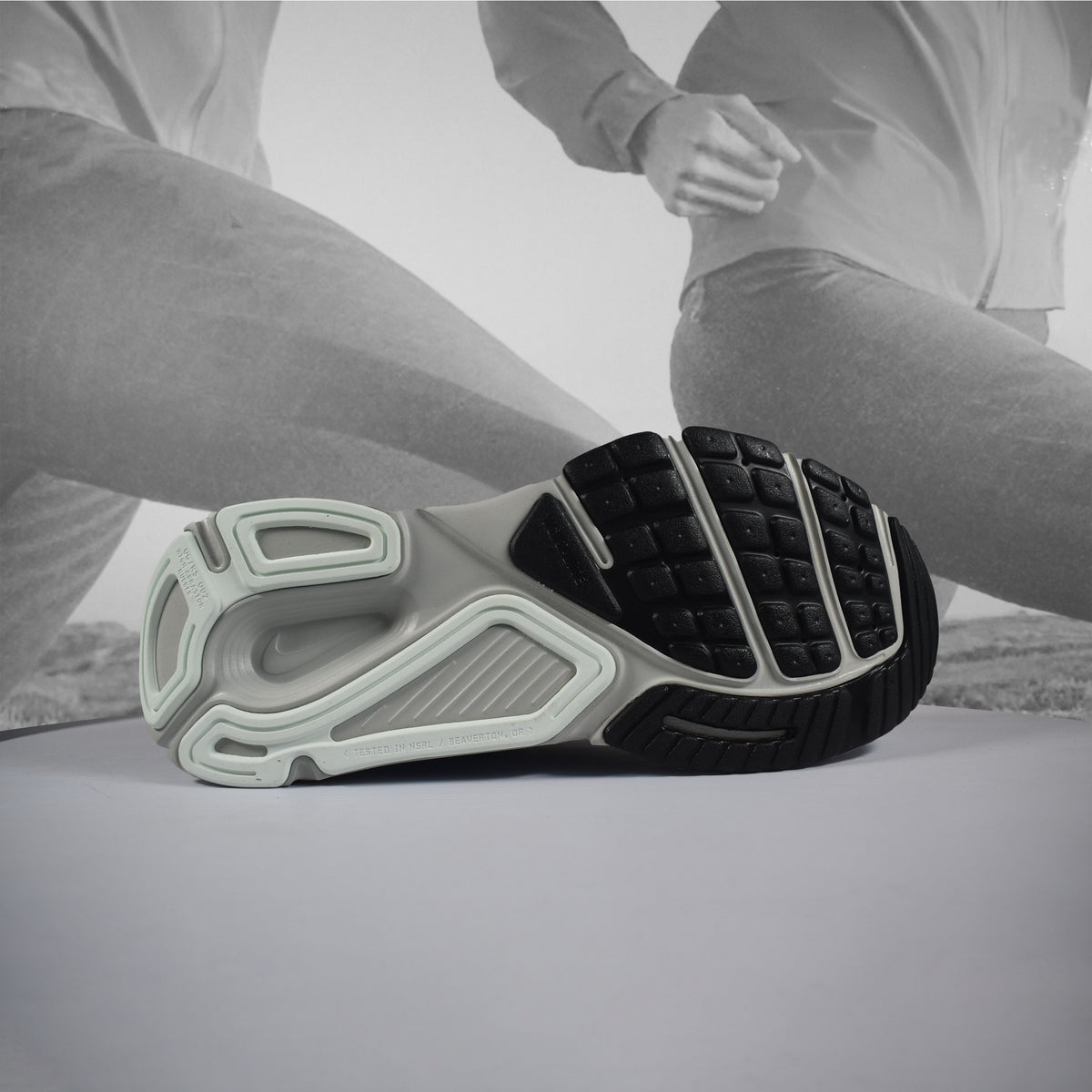
The Structure Plus uses a dual-rubber outsole with different rubber characteristics across the shoe.
Softer rubber in the forefoot helps preserve flexibility and smoother transitions, while harder, high-abrasion rubber in the heel is designed to withstand repeated impact and wear.
This makes the shoe appropriate for runners who put substantial mileage through their daily trainers.
Does the Nike Structure Plus Have a Carbon Plate?
No. The Structure Plus does not use a carbon-fibre racing plate.
Its stability comes from the midsole construction, support system and platform geometry. This is important because the shoe is designed primarily as a daily training and stability shoe, rather than as a dedicated carbon-plated racing model.
Structure Plus vs Nike Structure 26
| Feature | Structure Plus | Structure 26 |
|---|---|---|
| Midsole | ZoomX + ReactX | ReactX |
| Cushioning Character | More cushioned and responsive | More conventional structured cushioning |
| Stability | High | High |
| Daily Training | Excellent | Excellent |
| Long Runs | Excellent | Excellent |
| Responsiveness | Higher | More controlled |
| Runner Preference | Support + premium cushioning | Support + traditional daily-training feel |
Structure Plus vs Nike Vomero Plus
| Feature | Structure Plus | Vomero Plus |
|---|---|---|
| Category | Stability trainer | Neutral maximum-cushion trainer |
| Support | Structured | Neutral |
| Midsole | ZoomX + ReactX | Full-length ZoomX |
| Drop | 10mm | 10mm |
| Ride | Stable, guided and cushioned | Soft, highly cushioned and responsive |
| Best For | Supportive daily mileage | Neutral high-cushion mileage |
The key decision is not simply which shoe has more cushioning. It is whether you want neutral maximum cushioning or maximum cushioning combined with a more structured ride.
Structure Plus vs Nike Pegasus 42
| Feature | Structure Plus | Pegasus 42 |
|---|---|---|
| Ride Type | Stable and guided | Versatile and more neutral |
| Support | Structured | Neutral |
| Cushioning | Higher | Moderate / versatile |
| Speed Work | Secondary use | More versatile for faster running |
| Long Runs | Excellent | Very good |
| Daily Training | Excellent | Excellent |
Performance Profile
| Performance Area | Structure Plus |
|---|---|
| Cushioning | 9.5/10 |
| Stability | 9.5/10 |
| Daily Training | 9.5/10 |
| Long-Distance Comfort | 9/10 |
| Recovery Running | 9.5/10 |
| Responsiveness | 8/10 |
| Tempo Running | 7/10 |
| Interval Running | 6/10 |
| Racing | 6.5/10 |
| Durability | 9/10 |
Key Features
- ZoomX foam stacked over ReactX foam
- Nike's most cushioned Structure stability platform
- Dedicated midfoot-support system
- 10mm heel-to-toe drop
- Approx. 309g in men's US 10
- Engineered mesh upper
- Secure midfoot band
- Dual-rubber outsole
- High-abrasion rubber in the heel
- Soft forefoot rubber for smoother transitions
- Reflective design details
- Regular and Extra Wide fit options
- Designed for road running
Who Should Buy the Nike Structure Plus?
The Nike Structure Plus is particularly well suited to runners who:
- Prefer a stable and guided running shoe
- Want more cushioning than a traditional stability trainer
- Run primarily on roads and paved surfaces
- Need a dependable everyday training shoe
- Run regular long-distance sessions
- Want a comfortable shoe for recovery mileage
- Prefer a higher-drop platform
- Want ZoomX cushioning without moving to a racing shoe
- Like a secure midfoot fit
- Need an Extra Wide option
- Are building towards marathon or ultra-distance events
Who Should Consider a Different Shoe?
The Structure Plus may not be the ideal choice if you:
- Strongly prefer a lightweight racing shoe
- Want a highly flexible and unrestricted neutral ride
- Primarily run short, fast intervals
- Want a carbon-plated racing shoe
- Prefer a minimal or low-stack sensation
- Do not enjoy structured support under the midfoot
Frequently Asked Questions
Is the Nike Structure Plus good for beginners?
Yes. Its combination of cushioning and stability makes it a practical option for runners starting a consistent road-running programme, particularly when comfort and support are priorities.
Is the Structure Plus good for everyday running?
Yes. Everyday running is one of its primary applications. It is designed to provide consistent cushioning and support across repeated training sessions.
Is the Nike Structure Plus good for long runs?
Yes. The substantial cushioning, 10mm drop and structured platform make it well suited to longer road-running sessions.
Is the Structure Plus good for flat feet?
Some runners with flatter arches may appreciate its supportive midfoot construction, but foot shape alone should not determine shoe selection. Comfort, gait mechanics and how the shoe interacts with your individual foot are more useful considerations.
Is the Structure Plus suitable for overpronation?
The shoe is designed as a stability model and provides a more guided transition through the gait cycle. Runners who benefit from additional structure may find it suitable, but the degree and type of support required varies between individuals.
Is the Nike Structure Plus heavy?
At approximately 309g in a men's US 10, it is not a lightweight speed shoe. The additional mass reflects its substantial cushioning and supportive construction.
Can I use the Structure Plus for walking?
Yes. Its cushioning and stable platform make it suitable for extended periods of walking as well as running.
Can I use the Structure Plus for treadmill running?
Yes. The shoe is designed for road running but its cushioning and stable platform also translate well to treadmill training.
Is the Structure Plus good for marathon training?
Yes. It is particularly well suited to easy mileage, recovery sessions and long runs within a marathon training programme.
Can I race a marathon in the Structure Plus?
Yes, particularly if stability and cushioning are more important to you than minimising shoe weight. Runners looking for maximum racing efficiency may prefer a dedicated performance racing shoe.
Does the Structure Plus replace the Pegasus?
No. They serve different purposes. The Pegasus is a versatile neutral daily trainer, while the Structure Plus is designed around supportive stability and higher cushioning.
Does the Structure Plus replace the Vomero Plus?
Not directly. Both offer substantial cushioning, but the Structure Plus adds structured stability while the Vomero Plus is a neutral maximum-cushioning shoe.
Does the Structure Plus have ZoomX?
Yes. ZoomX is used in combination with ReactX foam in the midsole.
Does the Structure Plus have ReactX?
Yes. ReactX forms part of the dual-foam midsole platform and provides the more structured foundation beneath the ZoomX layer.
Does the Structure Plus have a carbon plate?
No. The shoe uses its midsole construction and support system rather than a carbon-fibre plate for stability and transition control.
Durban Runner Expert Recommendation
The Nike Structure Plus is an important option for runners who sit between traditional stability shoes and highly cushioned neutral trainers.
Its defining characteristic is the combination of premium ZoomX cushioning with the controlled support of the Structure platform. That gives it a different personality from both the Pegasus and Vomero families.
If your priority is comfortable daily mileage, stable transitions, long-run support and a cushioned ride that remains controlled when fatigue sets in, the Structure Plus deserves serious consideration.
For runners preparing for longer events such as a marathon or Comrades, it can also make sense as part of a broader shoe rotation, particularly for easy, recovery and long-distance training.
Find the Right Running Shoe for Your Foot
The correct running shoe is about more than selecting a stability or neutral label. Foot shape, arch behaviour, running mechanics, heel strike, training volume, previous injuries, preferred cushioning and intended use all influence whether a shoe will work for you.
At Durban Runner, our RunEasi Running Analysis helps assess how you move and how your footwear interacts with your running mechanics. Our specialist team can also assess your current shoes, foot shape and training requirements to help determine whether the Structure Plus is the appropriate choice for your running.
The Bottom Line
Nike Structure Plus is a highly cushioned stability road-running shoe designed for runners who want more comfort without sacrificing support.
ZoomX provides responsive cushioning, ReactX creates a supportive foundation, and the dedicated midfoot-support system provides a more controlled heel-to-toe transition.
It is particularly well suited to daily running, recovery sessions, long runs, high-mileage training, marathon preparation and runners who prefer a stable, guided ride.
If you want a neutral racing shoe, a lightweight tempo trainer or an unrestricted minimalist feel, there are more specialised options. But if your priority is cushioning + stability + everyday reliability, the Nike Structure Plus is built specifically around that combination.
Share



Safe Shopping with The Durban Runner
-

Pick up or Delivery
Get your items in 2 to 5 days or pick up at our store. Enjoy free delivery on orders over R1500 across South Africa.
-

Secure Checkout
Choose from multiple payment options at checkout. Shop Now and Pay Later with Payflex.
-

30 Day Returns
Hassle-free returns within 30 days. Money back guarantee.
Subscribe to our emails
Be the first to know about new collections and exclusive offers.